Showing posts with label Fundamental Movement Skills. Show all posts

Monday, April 14, 2014

Keeping Kids Engaged And While Teaching/Coaching Age/Developmentally Appropriate Skills/Movements

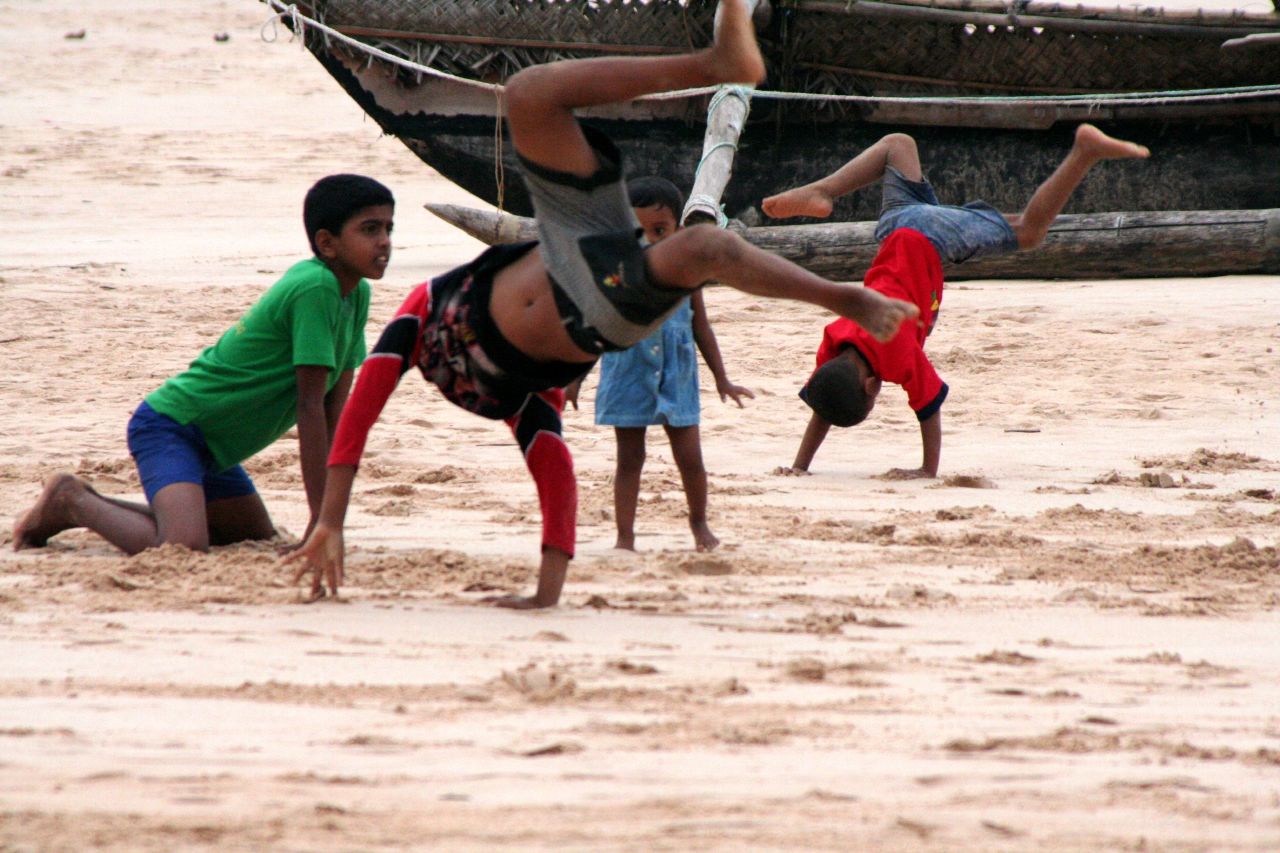
Which of these group of kids do you believe will become better at sports and learn more?

OR, these kids...


Let's also ignore the age difference - the pictures simply depicted the dichotomy I wanted to discuss :P

So.. which kids will become better athletes?

Which of those two pictures will ultimately produce the next superstar?


Did you pick the second picture? The one where they are doing drills. If you did, I am sorry to say you are incorrect. Well, that isn't quite true. The more accurate answer is there is no way for us to know.

The key point, however, is that doing drills and constant skill work at a very young age is NOT, I repeat. Doing drills, skills and technique work at a young age IS NOT what will determine how successful of an athlete your young child will become. Although I will disclaimer that Canadian Sport for Life does acknowledge the early specialization allotment for gymnastics, diving, and figure skating.

Recently, I came across a young mother that was coaching for the first time her young four year old boy. He would get upset that mommy was paying attention to others (a feeling I know all to well with an only child), the lack of response and seeming involvement from parents, and teaching these children how to play ball. The following was my take on it, and my advice (mind you, it was unsolicited, but we all know that's the best kind :P).

Why Kids Quit Sports


Something I shared recently about the reasons for kids quitting sport permanently, and at a very young age (typically before 13), was featured on Little League Dad’s Twitter News this morning:

Click on the image for a link to the website it was shared. Click on this link for the actual article - http://activeforlife.com/why-kids-quit-sports/

Please take a minute to read the article, and then here is my response to it:

It’s very true. I have had the real pleasure of being able to discuss the aspects of internal vs. external motivation with Olympic rower and now elite trainer of rowers, and his talk on “Carrot or the Stick” reinforces that we need to create an environment and culture of internal motivation, rather than the dominant culture of external motivation, or outcome based. This isn’t to say that results aren’t important, but it’s how we frame the issue, treat our children (athletes), and place the focus.
Children are not miniature adults. They learn, move, and play in fundamentally (and wonderful) way. In fact, we could truly learn from them. We need to follow models like Canadian Sport for Life’s (CS4L) Long Term Athlete Development; whereby, 0-6 years old is the Active Start and focuses on the ABCs (Agility, Balance, Coordination) through unstructured play. Yes, PLAY! For the first six years kids should be playing. And heck, let them create their own play. We as parents/coaches often believe we need to give a structured environment. We really don’t. Kids are amazing, and will find incredible ways to move in all sorts of ways.
From here, the 6-8/9 (slightly different for boys/girls), we move to the FUNdamental Stage. This is when “skills” are first introduced, but once again, in an unstructured, informal setting. That is, create games or activities that produce a given movement, but do not run 7 year olds through circuit training as you may a young adult. As well, kids should be playing 2-3 sports/activities, and not specializing until potentially later in the Train to Compete/Win Stages. A disclaimer, even the CS4L acknowledges that a few sports do require early specialization, such as gymnastics, diving, and I believe the other is figure skating.
Finally, it is paramount children learn the 12 Fundamental Movement Skills, as put forth by Physical & Health Education Canada, and more so before puberty. It has been shown that children that does not learn these, object manipulation, stability, and mobility skills have significant barriers later in adulthood to entering or remaining physically active.
Great article. We need to promote age/developmentally appropriate learning and teaching for our children, and we have many great models to follow and help guide us. We need to create a FUN environment for our children. Let them play, and let them create their own play